Fixed Deposits: Designing for Stability Without Overbuilding
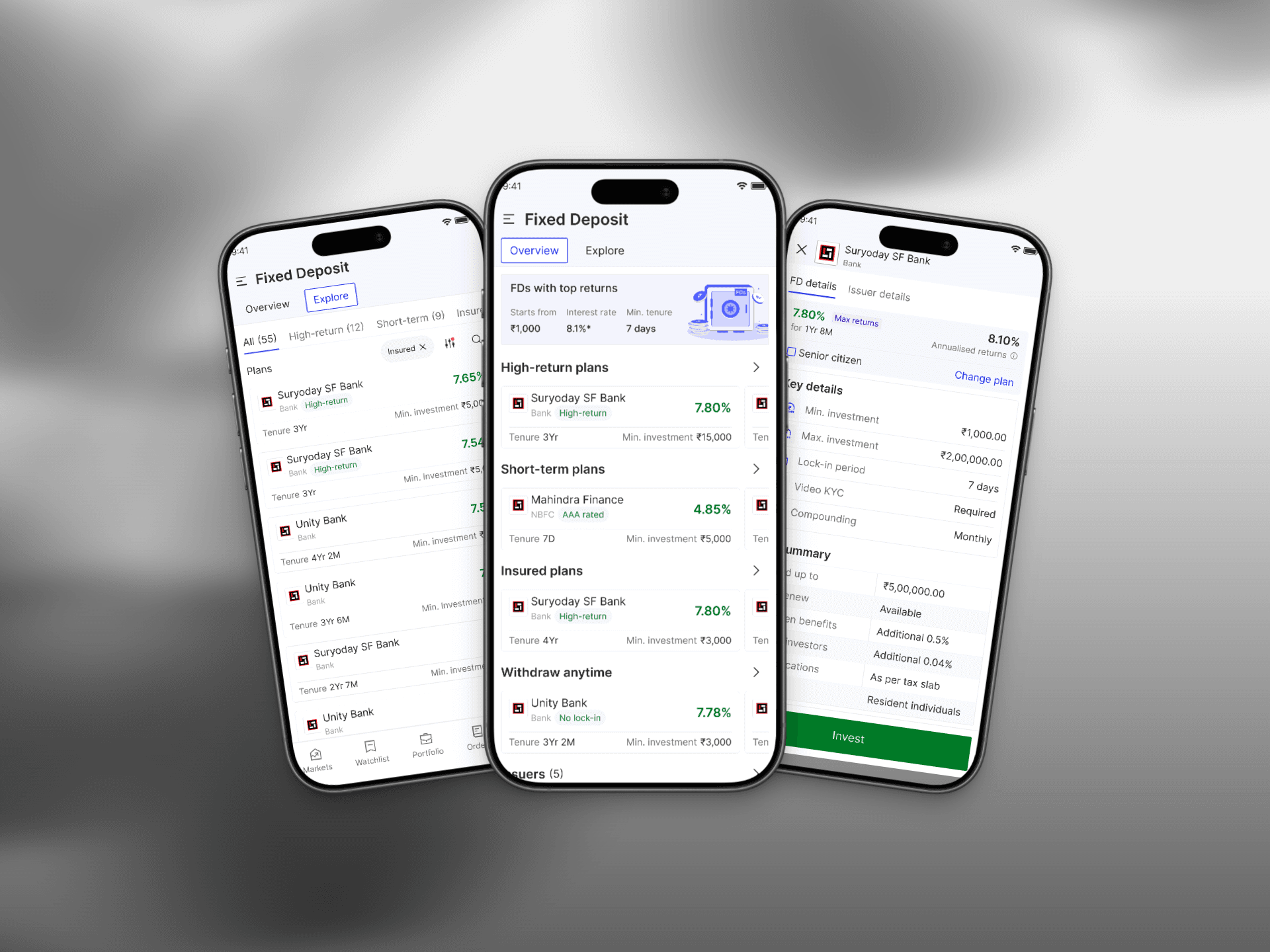
Overview
FYERS is where users come to grow their money.
They trade, they invest, they take calculated risks.
But market behavior is not constant.
And neither is user intent.
When markets become uncertain, the same users who were actively investing start thinking differently:
"Where can I safely park my money for now?"
And at that moment, FYERS had a gap.
The opportunity
Users were already using FYERS for:
Trading
Long-term investing
But during volatile conditions, their intent shifted from
growth to stability.
They were not looking for new opportunities.
They were looking for safety and predictability.
But when their intent shifted from growth to safety, the platform didn’t support that shift.
So they:
Moved funds out
Looked for safer options elsewhere
Broke their journey outside FYERS
What this revealed?
This wasn’t about lack of trust.
It was about a missing layer in the product ecosystem.
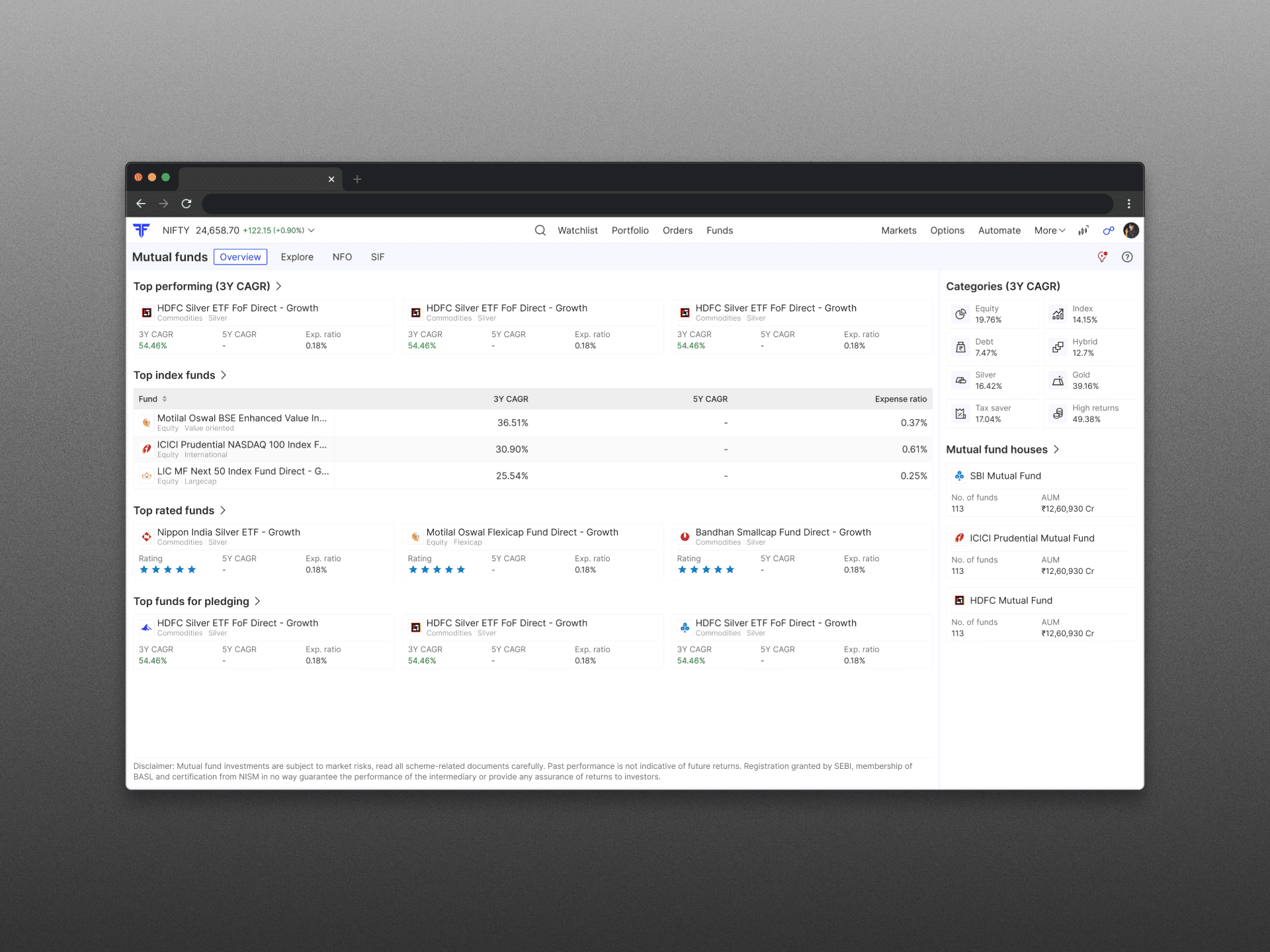
FYERS supported users when they wanted to grow their money. But didn’t yet support them when they wanted to step back and protect it.
Initial direction
We started with a fairly ambitious plan.
The idea was to build Fixed Deposits as:
A full-fledged product
With calculators, issuer comparisons, and deeper analysis tools
A complete in-platform experience
On paper, it looked comprehensive.
But something felt off.
The realization
We were solving for completeness, just to be ahead of our competitors. Not for the moment, or for our own users.
Users coming to Fixed Deposits were not trying to:
deeply analyze
compare multiple issuers
optimize aggressively
They were trying to:
Make a safe, quick decision and move on.
The thought shift
So we stepped back and simplified the goal:
Instead of building everything,
build just enough to help users decide with confidence.
Final Product Direction
Users explore and decide inside FYERS
Users complete the investment through partner banks
Users return to FYERS to track and review their investments
Design approach
1
Simplify without losing value
We removed features that didn’t serve the primary intent:
Removed FD calculators
Key calculations were already available in the order flow
Removed issuer comparison
Avoided unnecessary analysis and decision fatigue
These features were present with our competitors, but their focus was only on FD unlike us.
Focus stayed on:
Clarity
Speed
Confidence
2
Reduce cognitive load on detail pages
The initial wireframes were data-heavy.
Users had to process:
Too many numbers
Too much information at once
Simplified this by:
Structuring information into clear sections
Highlighting what matters most
Making the page easily scannable
So users could understand quickly without effort
3
Enable users to take informed decisions
Discovery and evaluation happen within FYERS
Final transaction happens on partner bank platforms with the help of the aggregator.
This allowed us to:
Move faster
Avoid unnecessary complexity
4
Handle the transition with care
One of the most sensitive moments:
When users leave FYERS to complete the investment
We ensured:
Clear communication before redirection (Mandatory pop-up)
Smooth visual and contextual continuity
Users can still track orders and review their FD investments within FYERS (Orders & portfolio respectively)
So it feels like a continuation, not a break and maintains a sense of ownership.
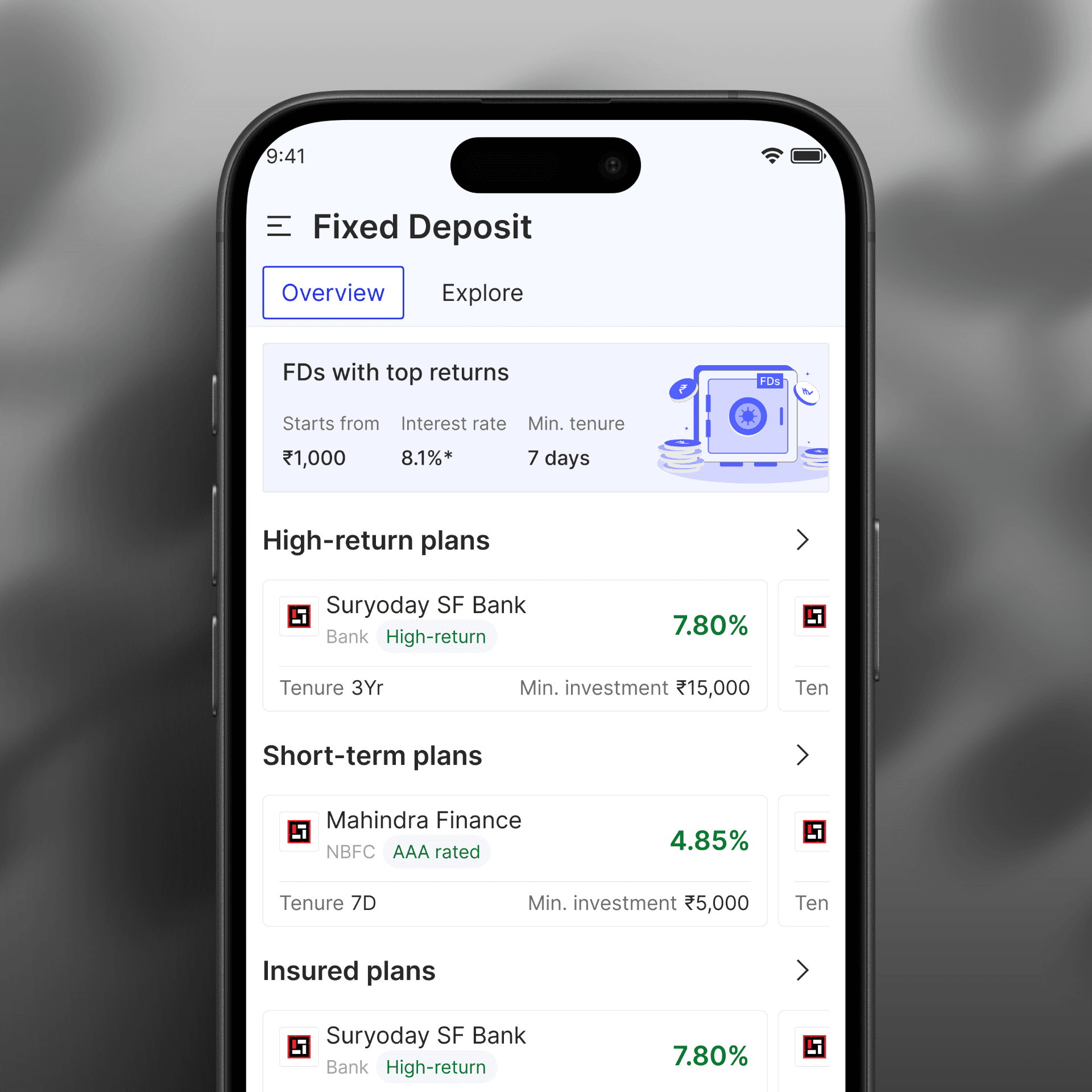
Ease of selection
Make confident choices with effective categorization.
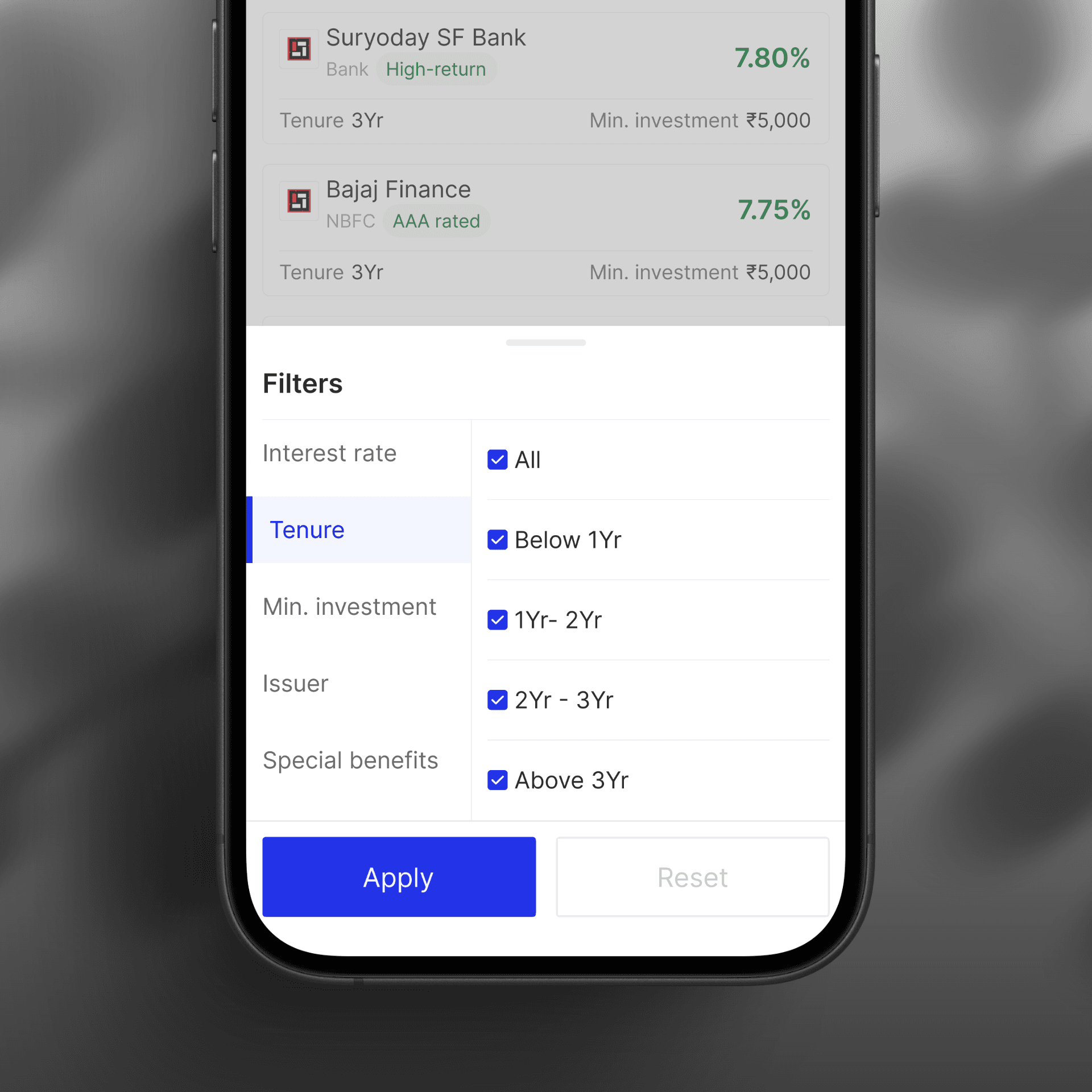
Drill down further
Narrow down deposits with smart filters in few taps.
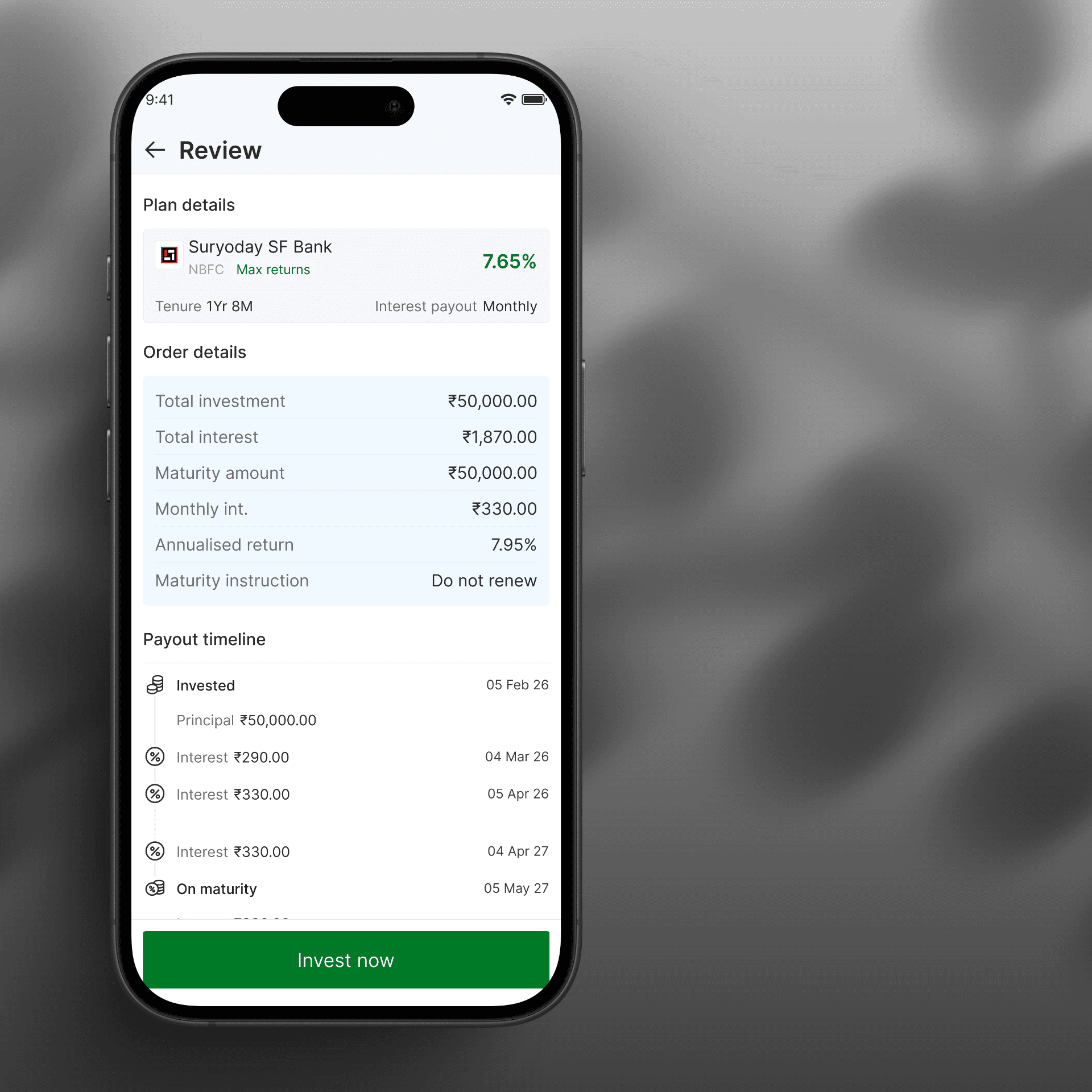
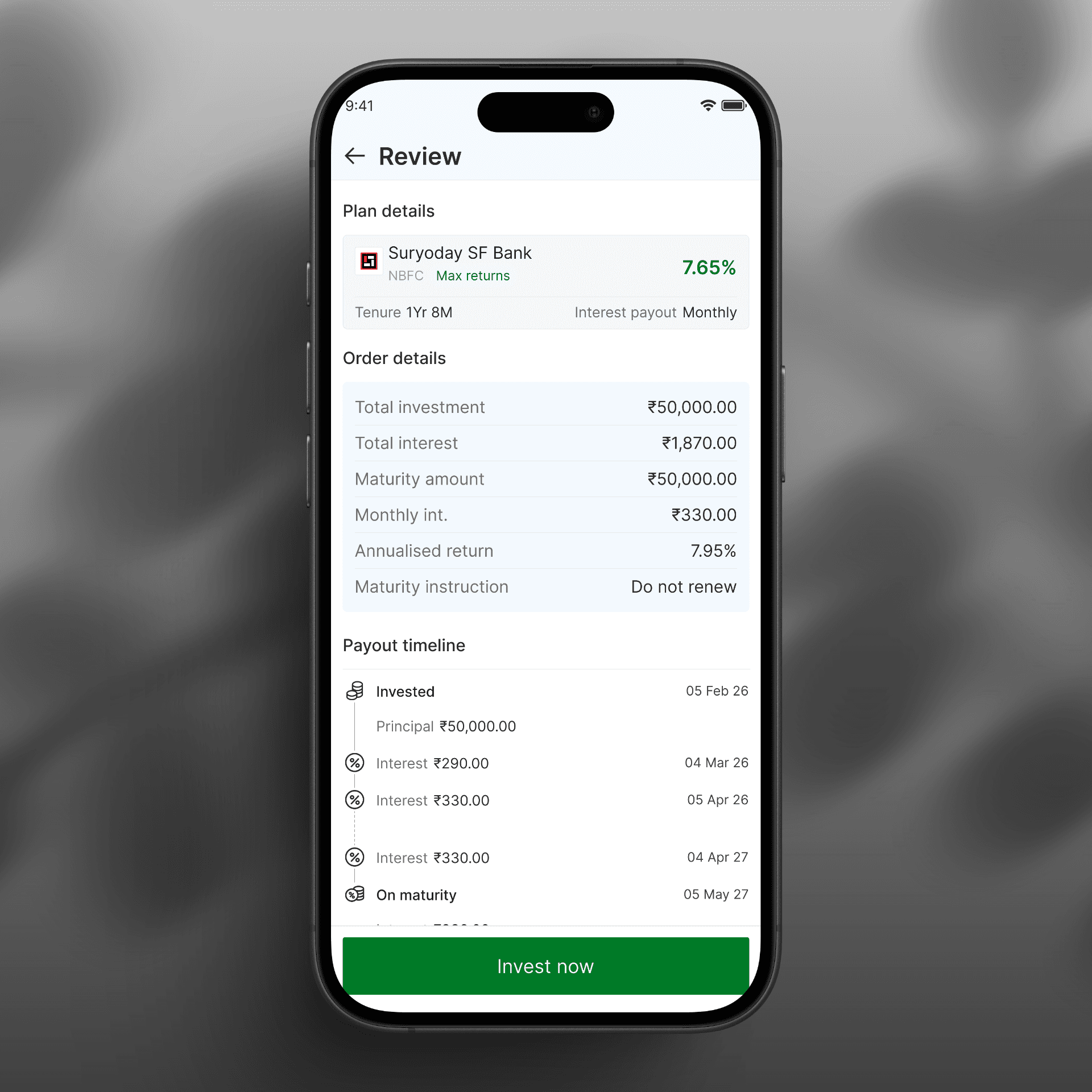
Review before invest
Understand key details of the FD before you commit.
Product fit
Fixed Deposits fills an important gap
Trading → Growth
Mutual Funds → Long-term investing
Fixed Deposits → Stability
Together, they support users across different financial states
What this enables?
Users don’t need to leave FYERS during uncertain conditions
Capital stays connected to the platform
FYERS becomes relevant across both:
growth decisions
safety decisions
Reflection
What I learned
More features don’t always mean more value
Good design is often about removing what doesn’t matter
Understanding user intent matters more than building completeness
What I would improve next
Reduce friction in the transition to partner platforms
Improve visibility into post-investment tracking
Introduce deeper tools only when user behavior demands it
See other projects