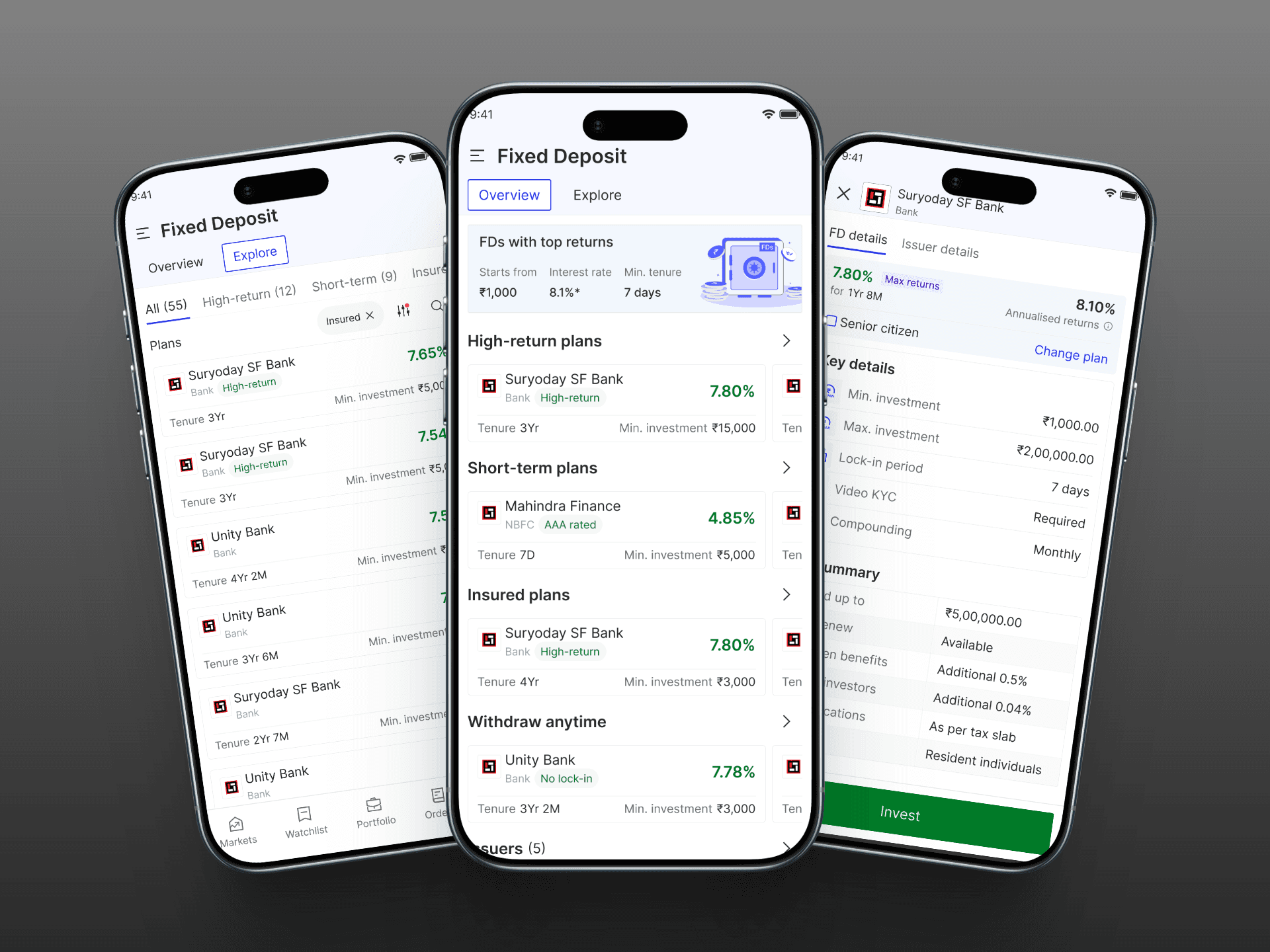
Mutual Funds: From fragmented access to a unified investment system
Driving ₹6.4 Cr revenue growth by improving visibility, trust, and control in Mutual Funds module.
Overview
When I started looking at mutual funds on FYERS, the problem wasn’t that the feature didn’t exist.
It did, as FYERS Direct, an external platform.
But for most users, it almost felt like it didn’t. There were no proper nudges to guide user about our mutual fund platform.
People were actively trading on the platform and building capital. But the moment they wanted to invest that money, things started to break.
Mutual funds were hard to find
Users were taken outside the app
Even after investing, they couldn’t easily track or manage what they owned
At the exact moments where users needed confidence, the experience created friction instead.
The problem
Some users didn’t even know FYERS offered mutual funds.
Some dropped off the moment they were redirected elsewhere.
And some who had already invested came back confused:
“Where do I see my funds?”
“How do I redeem this?”
“Why isn’t everything in one place?”
This showed up not just in feedback, but in behavior:
Increased support requests
Hesitation around investing
Low engagement with the feature
Users raised issues and the ticket numbers were high.
“Where do I see my MF holdings?”
Sumit Yadav and 37 others
“How do I redeem this fund?”
Asif Rizwan on support call
“Why isn’t everything in one place?”
Chirag Sinha on community
This wasn’t just a UX issue, it was a system design problem. Users didn't think of trading vs investing or equity vs mutual funds at first. They thought in terms of "My money" and they expected one place where they could see it, act on it with trust.
So with careful consideration, the problem has been identified as
Strategy
Make it feel like one system, not multiple features
1. Bring everything inside the platform
No more redirecting users elsewhere → Keeps trust intact
2.Don’t make users learn something new
Use patterns they already understand from trading
→ Reduces effort and hesitation
3. Support the full journey
Not just investing, but also tracking, managing, exiting
→ Gives users a sense of control
A key decision along the way
There was a real concern internally:
“Will adding mutual funds dilute the trader-first identity?”
Instead of seeing it as an addition, we reframed it:
Mutual funds are not a separate product. They are what users use after they trade
Trading generates capital
Investing helps users hold and grow it
This made mutual funds less of a distraction and more of a natural extension of the platform
Design approach
Now:
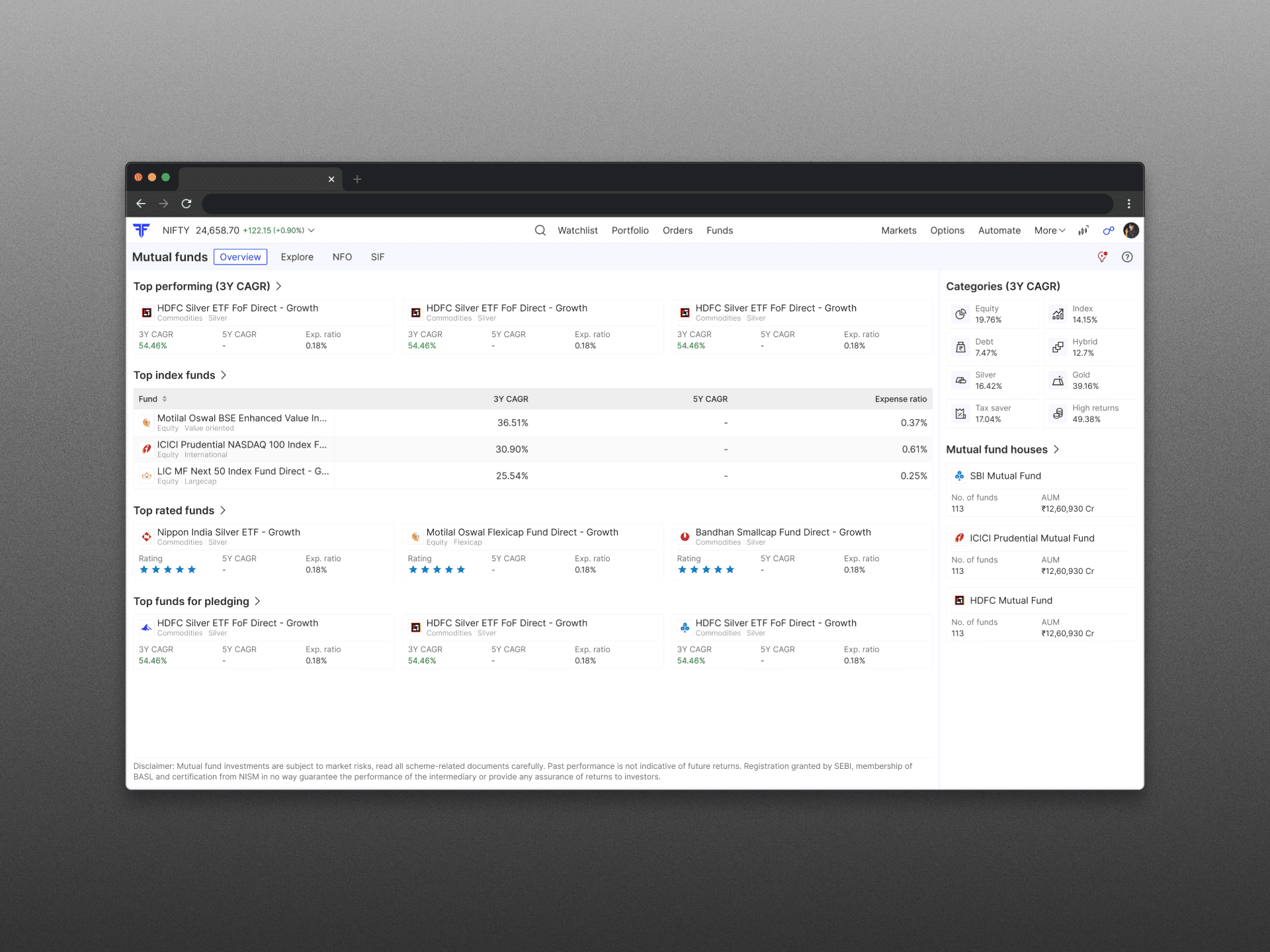
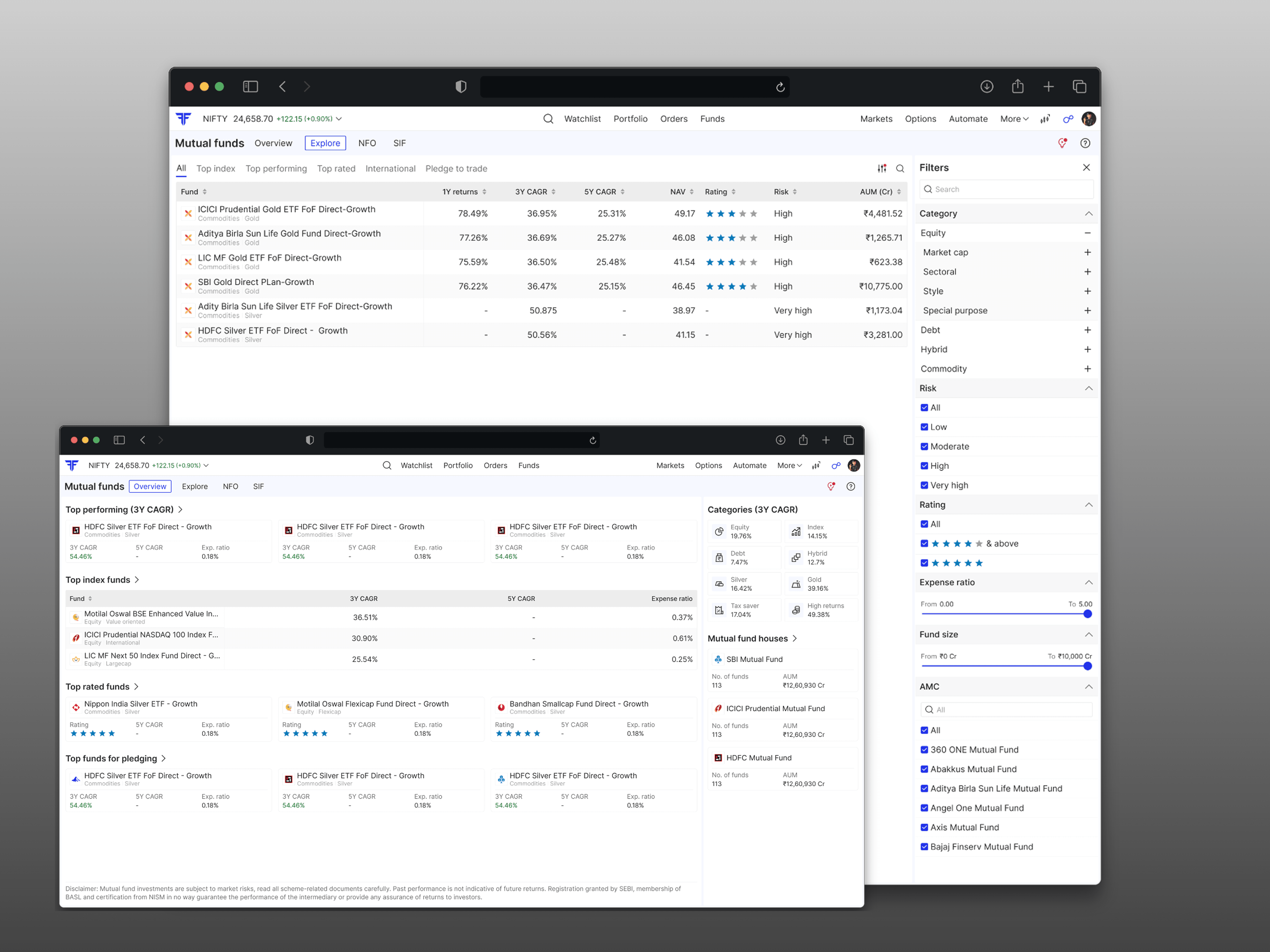
Dedicated landing page with clear categories. Avoided dumping too much data upfront. Explore page with filters for deeper discovery.
Earlier:
Redemption was hard to find and caused higher number of customer calls.
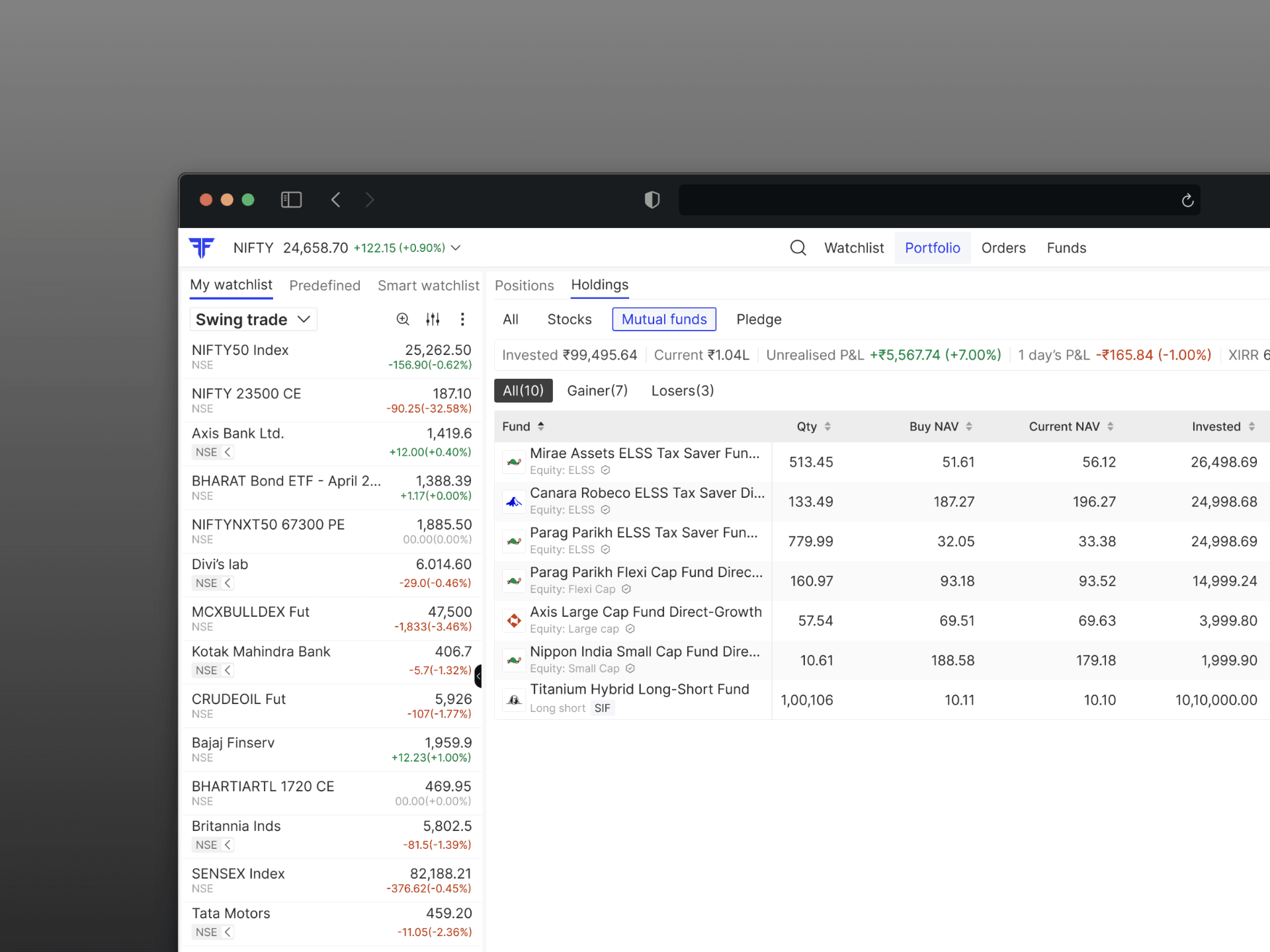
Now:
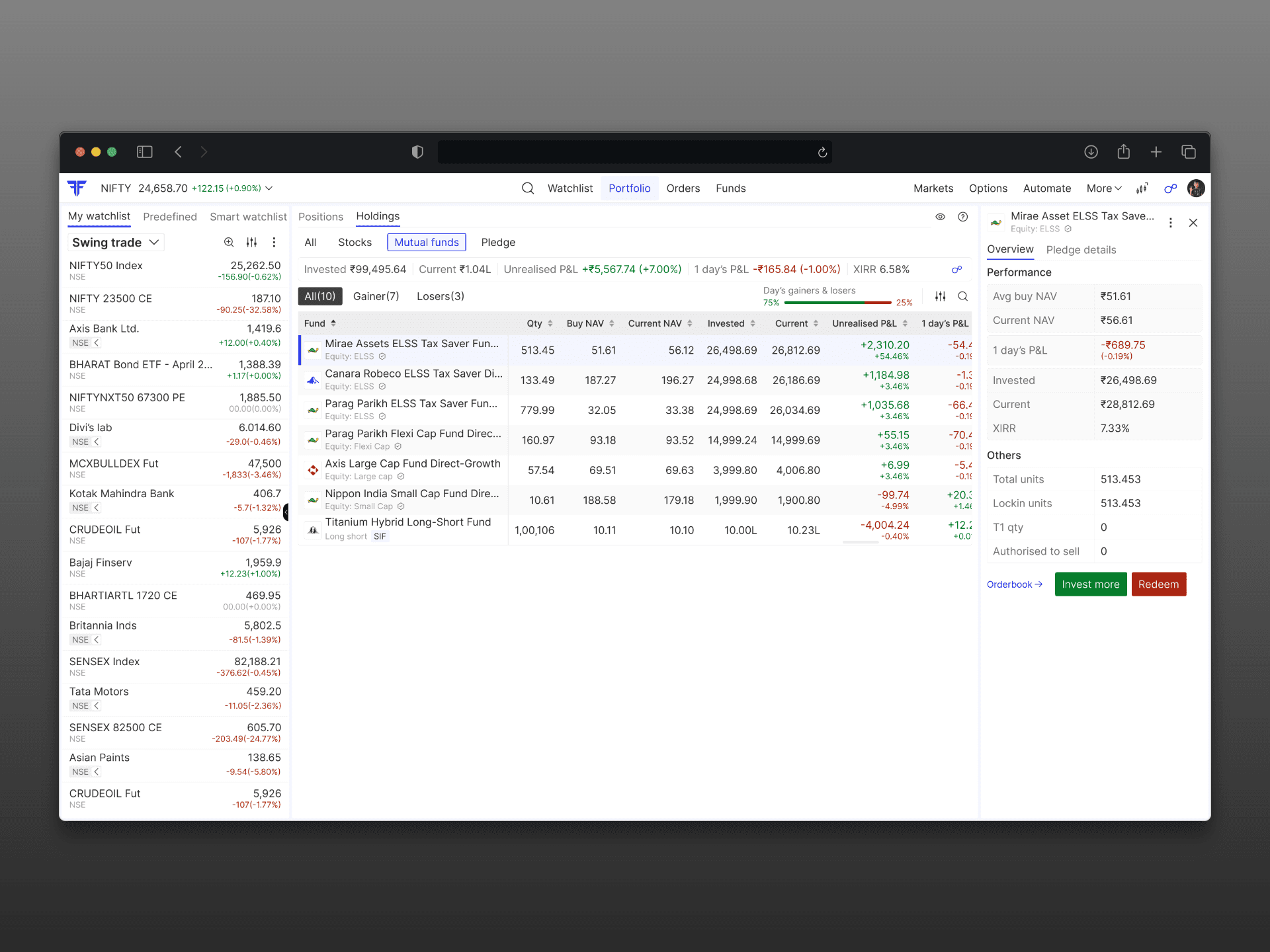
Actions are available directly from holdings. The flow feels similar to selling stocks. No relearning. Users act faster and with confidence which reduced the customer complaints.
Expansion
Supporting Advanced Investment Behavior
In the next phase, introduced:
Step-up SIP
SWP (Systematic Withdrawal Plan)
STP (Systematic Transfer Plan)
Specialised Investment Funds (₹10L minimum) introduced for the very first time in India.
This enhanced the usability of mutual funds and enabled users to follow long-term planning and attracted higher ticket size investments.
Impact metrics
Following the final product roll-out
Conversion: 59.47% → 63.53%
Unique investors: 2,418 → 2,849
SIP creations: 14,956 → 18,127
Revenue: ₹21 Cr → ₹27.4 Cr
Beyond metrics:
Reduced friction in redemption and portfolio visibility
Increased engagement from existing traders
Positioned mutual funds as an active investment channel, not a hidden feature
Reflection
What I learned
Trust is built through visibility and control, not just interface polish
Users prefer unified systems over fragmented tools
Shipping early enables faster, data-driven iteration
See other projects